
Stranger Than Fiction
August 2025
Crime Most British
by Dean Jobb
Three recent true crime releases offer fresh takes on the victims of some of Britain’s most infamous and intriguing murders, from Dr. Crippen’s wife and the women serial killer Reginald Christie lured to their deaths to the targets of a crime wave that terrorized London during the dark days of the Blitz.
Harry Procter was a star Fleet Street journalist, a scrappy, scoop-hungry reporter with unrivalled police and underworld sources who excelled at exposing scandal and wrongdoing. There was a saying in 1950s London, repeated when people caught wind of some outrageous news or rumor: “Tell it to Harry Procter.” Fryn Tennyson Jesse, the wealthy, privileged niece of the poet Alfred, Lord Tennyson, was a pioneering true crime writer and a student of the motives and methods of murderers. She analyzed famous crimes for the respected Notable British Trials series, confounding critics with her “passion for grim, ugly” subjects and unladylike interest in “murder, lust, treachery” and other unpleasantness. One case brought these polar opposites together—the serial killer Reginald Christie.
 Kate Summerscale, the acclaimed author of The Suspicions of Mr. Whicher and other true crime classics, harnesses the investigations of Jesse and Procter to recount the Christie murders in The Peepshow: The Murders at 10 Rillington Place (Penguin Press). In 1953, the bodies of three women in their twenties were found entombed in a wall of his flat in the rundown London neighborhood of Notting Hill. His wife’s body was found under the floorboards and police unearthed the bones of two more women when they dug up the garden. Christie, arrested after a weeklong manhunt, had served in the Metropolitan Police reserve during World War Two. Even more shocking was his link to a double homicide in another unit at the same address four years earlier. Tim Evans confessed to strangling his wife and infant child, then recanted and accused Christie of the crime, but was convicted and executed—based, in large part, on Christie’s denials and apparent lack of motive.
Procter interviewed Christie after the Evans murders, found him helpful and ingratiating, and assumed he was telling the truth about the “wicked man” who lived upstairs. But it seemed unlikely that two different killers had murdered at least eight people at the same address in such a short time span. “By failing to suspect Reg Christie” of murdering Evans’ wife and child, Summerscale writes, the ace reporter “might have let an innocent man hang—and left Christie free to find more victims.”
Procter’s determination to expose a miscarriage of justice drives the narrative, in tandem with Jesse’s efforts to understand Christie’s motives and revive her flagging career as one of Britain’s foremost chroniclers of murder. “I saw and felt the monster,” she said after her first glimpse of him in a courtroom. Summerscale captures how the public and Britain’s tabloid press reacted to the crimes with a combination of revulsion and can’t-look-away fascination. Neighbors and passersby craned their necks as the police gutted the building and carted off evidence. It was, as her title asserts, a peepshow. A headline described the case as “A London nocturne with the grim fascination of a thriller.” One of Procter’s rivals dubbed Christie “the Ripper of Rillington Place.”
Summerscale ensures Christie’s victims are not overshadowed and portrays the desperate lives of the young women who were drawn to postwar London in search of a better life, only to become ensnared in a world of homelessness, drunkenness, and prostitution. An influx of Allied troops had created “a boom time for the sex trade,” she writes, but after the war fewer clients meant sex workers were forced to “solicit more openly and take more risks.” They were easy prey for an unassuming and devious predator like Christie. He promised back-street abortions to lure victims to Rillington Place, where he gassed, raped, and strangled them. His motive? “The sheer cold joy of killing,” Procter concluded. Summerscale’s retelling of this sordid case—and her solution to the final mystery surrounding the crimes—is riveting true crime at its best.
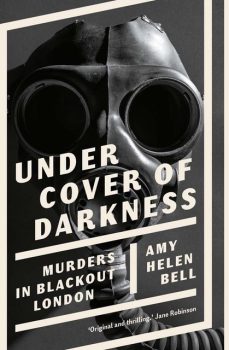 The human bones found buried in Christie’s garden were the remains of his first victims—two women who went missing during the war. As Canadian historian Amy Helen Bell discovered in researching Under Cover of Darkness: Murders in Blackout London (Yale University Press), the Blitz, air raid blackouts, and the stress and disruptions of wartime life in London produced the perfect cover for Christie and other murderers. “The war created a new character of murder, one that was desperate and brutal, and often random,” she argues. “The social dislocations and the emotional toll of war increased deadly violence in the family and among strangers, while the bomb-scarred landscape helped to hide the victims.”
Fans of the television series Foyle’s War know that a single suspicious death could seem insignificant when thousands of soldiers and civilians were being killed every day. The relentless detective Christopher Foyle, however, is determined to do his part to uphold the law and prevent the guilty from getting away with murder. There was no shortage of investigating to be done. Murders in England and Wales, Bell notes, jumped from fewer than 300 a year in 1939 to almost 500 in 1945. In London, the number of people murdered rose from 46 to 66 a year for the same period, but these statistics do not include other possible victims of murder—deaths mistakenly chalked up to bombing raids, bodies found floating in the Thames, and people who disappeared.
Bell deftly describes the hardships and tension of living in wartime London and employs case studies to trace how murders increased and evolved as the conflict progressed. A mother who feared England was about to be invaded early in the war killed her beloved daughter and tried to kill herself. An opportunistic husband murdered his wife and buried her remains in the ruins of a church, making the Blitz look like her killer. Allied soldiers trained to kill Nazis turned their weapons on their British hosts and on each other. Women were vulnerable to attack on the darkened streets and in their homes. RAF pilot Gordon Frederick Cummins, who brutally murdered four women and tried to kill two others during a six-day rampage in 1942, came to be known as the Blackout Ripper. Amid the chaos of war—evacuations, destroyed homes, the constant turnover of servicemen and refugees—it was easy for killers to escape and people to lose track of a loved one who was a victim of homicide.
Bell, a professor of history at an Ontario college, scoured Scotland Yard case files, court records, memoirs, and press accounts to document these murders. She also researched genealogical resources and newspaper databases to ensure the deeds of perpetrators in this account do not overshadow the stories of the victims whose lives were cut short. She notes how thoroughly the deaths were investigated, even when there was little evidence and few leads. It turns out there were plenty of dedicated Christopher Foyles on Britain’s home front.
Dr. Hawley Harvey Crippen is one of Britain’s best-known and most reviled killers. In 1910 he poisoned his wife, a music hall performer, and buried her dismembered corpse in the cellar of their home. When her remains were discovered months later, the North London Cellar Murder became a press sensation. Crippen, accompanied by his secretary-turned-mistress Ethel Le Neve, tried to escape on a liner bound for Canada but were spotted by the captain, who used the new technology of wireless to alert Scotland Yard. The case has been the subject of countless books, films, fictionalized accounts, and podcasts. So here’s a pop quiz: can you name the victim?
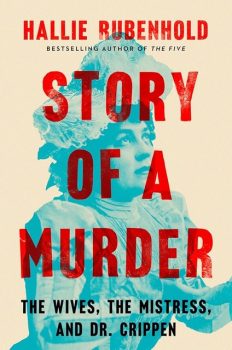 It’s a question likely to stump even die-hard true crime fans, and that’s a point Hallie Rubenhold hammers home in her ambitious and definitive reassessment of the case, Story of a Murder: The Wives, the Mistress, and Dr. Crippen (Dutton). “No murderer should ever be the guardian of their victim’s story,” the bestselling British author notes at the outset of the book, “and yet this is the role that Hawley Harvey Crippen has always held.” Crippen’s name and deeds endure. Belle Elmore’s life and accomplishments have been as hidden and buried as her body was in the basement. (Crippen, a homeopathic doctor, still overshadows his victim – he rates his own Wikipedia page, but Elmore does not.)
“This is the story of a murder, not a murderer,” she explains. Crippen is relegated to the status of “one character among an ensemble cast brought together to tell a more panoramic and human version of one of the most infamous crimes of the early twentieth century.” So are other men who have played leading roles in the tale, from the detective in charge of the investigation, Walter Dew, to celebrated forensic pioneer Bernard Spilsbury. The case, Rubenhold asserts, is “predominately about women”—the mistress, Le Neve; the victim’s friends and fellow performers who refused to believe she had walked out on her husband and died in America; and of course, Elmore herself. Also on the list of the overlooked is Crippen’s first wife, Charlotte Bell, who died in 1892 at the age of thirty-three. The author makes a convincing case that Crippen killed her as well, while preforming an abortion.
Rubenhold’s previous work of historical true crime, The Five, takes a similar approach to the Jack the Ripper saga, breaking from the familiar obsession on the Whitechapel killer’s identity to an exploration of his victims and their lives of desperation in Victorian London. “A crime creates a fixed snapshot of an era,” she observes, and enables historians “to take a core sample of that society . . . to drill into a period and to examine the realities of life that lurk beneath the publicly espoused values and beliefs.” In Story of a Murder, Rubenhold once again mines the past to produce a brilliant, balanced, and wholly original account that will surprise true crime buffs who thought they knew everything there was to know about the murder of Belle Elmore.
————-
Dean Jobb’s latest true crime book, A Gentleman and a Thief: The Daring Jewel Heists of a Jazz Age Rogue (Algonquin Books and HarperCollins Canada), is a New York Times Editors’ Choice and a national bestseller in Canada. It’s the story of Arthur Barry, who charmed the elite of 1920s New York City while planning and executing some of the most brazen jewel thefts in history. Find him at deanjobb.com.
Copyright © 2025 Dean Jobb